


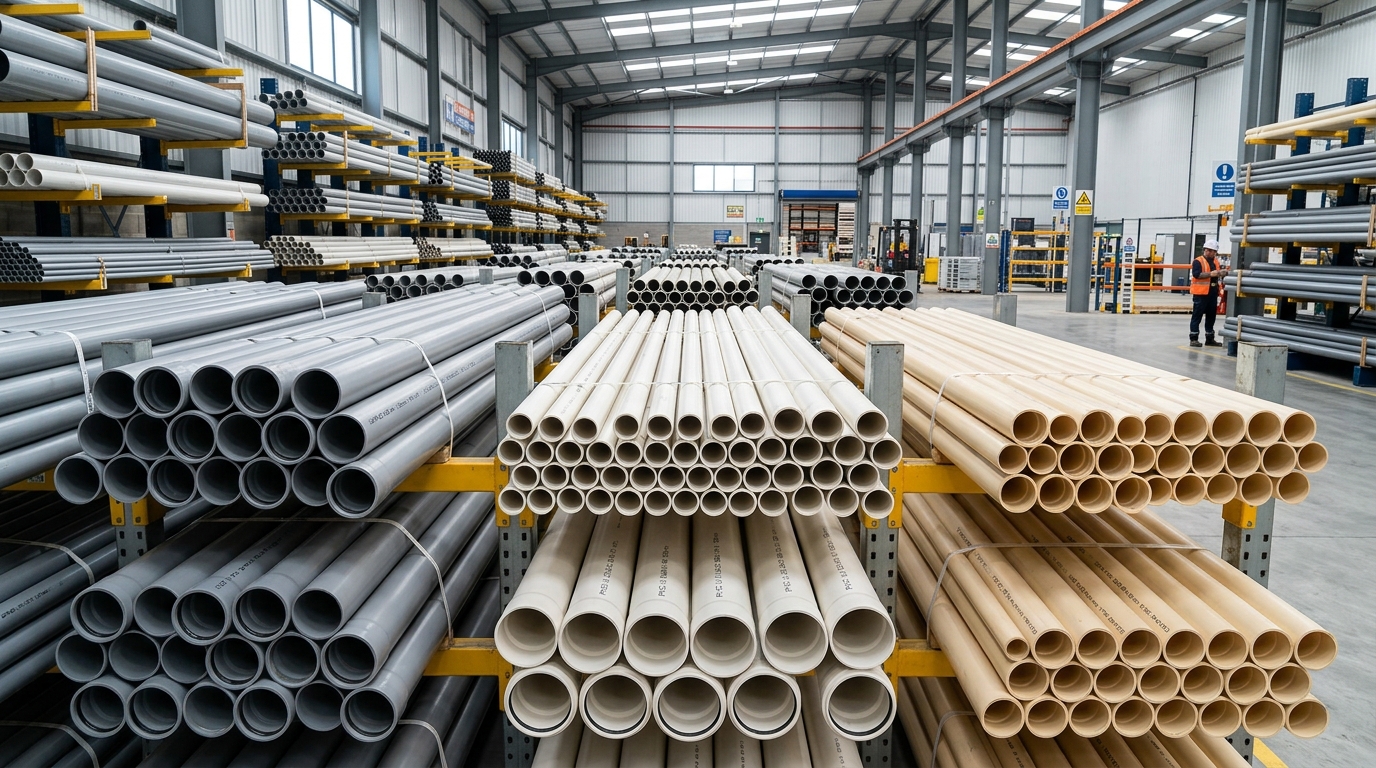
Understanding Pipe Standards: Choosing Between PVC, uPVC, and CPVC
When planning modern plumbing installations or infrastructure projects, specifying the correct pipe material is one of the most critical decisions an engineering team makes. Although PVC, uPVC, and CPVC share similar chemical roots, their thermal ratings, chemical resistances, and structural behaviors differ significantly.
"Selecting the right pipe polymer ensures long-term pressure integrity, prevents costly concealed leaks, and delivers maintenance-free fluid distribution."
1. PVC Pipes (Polyvinyl Chloride)
Standard PVC pipes are widely utilized for general water distribution, agricultural irrigation, and low-pressure utility lines. They offer lightweight handling, smooth internal flow characteristics that prevent sediment buildup, and cost-efficient installation.
2. uPVC Pipes (Unplasticized Polyvinyl Chloride)
Because uPVC contains no added plasticizers, the material is substantially stiffer and stronger than standard plasticized vinyl. uPVC pipes are ideal for pressure plumbing systems, commercial potable water supplies, and industrial fluid transmission where high tensile and impact strength are mandatory.
3. CPVC Pipes (Chlorinated Polyvinyl Chloride)
Through an additional chlorination process, CPVC gains significantly enhanced thermal resistance compared to standard PVC or uPVC. CPVC is the industry standard for hot and cold domestic water supplies, capable of handling elevated fluid temperatures without softening, corrosion, or scale formation.
Size Range Verification (20 mm to 110 mm)
Three Golden Arrows produces pipes in confirmed sizes ranging from 20 mm up to 110 mm (up to 4 inches). Whether sourcing branch distribution pipes or main service lines, our team coordinates with contractors and distributors across India to ensure reliable project execution.
- 20–32 mm: Internal domestic water branch lines and sanitary fixtures.
- 40–63 mm: Floor risers, sub-mains, and commercial plumbing loops.
- 75–110 mm: Main intake headers, high-volume utility lines, and soil drainage stacks.